16:32
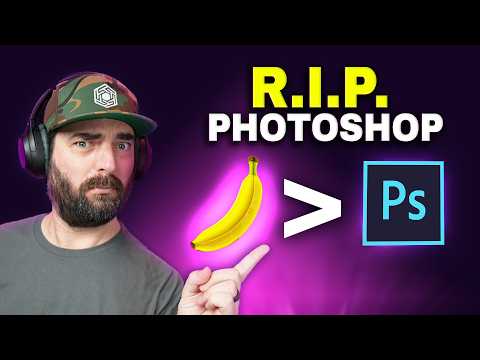
Nano Banana
Matt Wolfe reports that an unreleased, unconfirmed AI image-editing model code-named "Nano Banana" — rumored but not confirmed to be from Google — is producing image edits on Twitter/Reddit that look better than GPT-4o's and even Studio Ghibli-style edits, and he demonstrates a free (if unreliable) workaround via LM Arena's blind "Battle" mode to try it before its official release.
Nano Banana is a code-named AI image-editing model that is not officially released, not confirmed by any company, and rumored (unconfirmed) to be from Google; it does not appear in Wolfe's own Google AI Studio.
Community examples show strong character/outfit/environment consistency across sequential edits, including cases where one edited output is fed back in as the next prompt's reference image (e.g., 'make them sitting on a billiard table' then 'make them now playing billiards').
Other showcased edits include swapping a held lantern for a shotgun with a full scene change, inserting a character (Tony Stark/Iron Man) into an existing group photo, colorizing and cleaning up old black-and-white/blurry photos, replacing text on a billboard, and blending two separate photos into one composited scene.
HBT (a community member) theorizes Nano Banana maps a subject into 3D volumetric space (shown via grid and skeleton overlays) and edits within that space, though Wolfe cannot confirm this and says he plans to get more detail from the model's creator.
Wolfe warns that sites like 'nanoanana.ai' falsely claim to offer Nano Banana access via API, stating flatly that this is not true because the model/API isn't public yet.
The only confirmed way to access the model currently is LM Arena (lmarena.ai), a blind A/B-test leaderboard site that ranks text, coding ('webdev'), and image-edit models based on user votes between anonymous 'Model A' and 'Model B' outputs.
LM Arena has three modes: Direct Chat (pick a specific model), Side-by-Side (compare two chosen models), and Battle (two random, undisclosed models); Nano Banana is only obtainable through Battle mode, since it's still in an initial data-collection/testing phase and isn't yet on the public leaderboard.
In Battle mode you get roughly a 20% chance of drawing Nano Banana; because the service is free, Wolfe's tip is to keep re-submitting the same image/prompt until you land on the model you want.
Wolfe's own live demo tests are inconsistent: the first two tries (surfer added to a river scene, then nighttime lighting) landed Nano Banana and looked good, but a later attempt to insert himself into a vampire/wolf image took many tries, sometimes surfaced other models (Seedream 3.0, Gemini 2.0 Flash preview, Qwen Image Edit), and when Nano Banana was finally selected it produced what Wolfe calls 'a very bad Photoshop edit.'
Qwen Image Edit is named as a comparable rival model also 'blowing people's minds' at image editing.
Wolfe tests YouTube-thumbnail generation (an idea he credits to Matt Vid Pro) by feeding it a base image plus his headshot; the Nano Banana-style result incorporated both images and added text but was not the correct aspect ratio, while a Gemini-generated version kept the proper aspect ratio.
Wolfe expects Nano Banana to become available soon 'in a much easier to use interface' that he says many viewers are likely already using and that he's discussed before on his channel, without confirming which product that is.
LM Arena's Battle mode functions as an unofficial free public beta for an unreleased model — accessible specifically because it isn't yet on the ranked leaderboard — while simultaneously harvesting the user preference votes that will eventually determine that ranking, making free access and data contribution the same act.
The chained-edit workflow (feeding an edited output back in as the next prompt's reference image) is presented as a way to preserve character/outfit/environment continuity across multiple sequential edits, which the video treats as a meaningful capability distinct from one-shot image generation.
Even in a video built around hype ('hottest thing on Twitter and Reddit,' 'full-on replacement for Photoshop'), Wolfe's own on-camera tests undercut the framing: multiple attempts were needed, competing models were sometimes preferred over Nano Banana, aspect ratios came out wrong, and one Nano Banana result is explicitly described as looking like 'a very bad Photoshop edit.'
The circumstantial case for Google's involvement rests entirely on absence of denial and pattern-matching (a claimed Google AI Studio sighting) rather than any confirmation — Wolfe is explicit that he cannot verify it and that the model isn't even in his own Google AI Studio access.
The HBT 3D-grid/skeleton theory, if accurate, would explain why the community's example edits keep pose, perspective, and spatial layout coherent across changes — but the video flags this as unconfirmed speculation, not documented model behavior.
«It's not always going to be great.»
— 00:00
«This could potentially even be a full-on replacement for Photoshop.»
— 00:20
«This thing is like the hottest thing on Twitter and Reddit right now.»
— 00:31
«The model goes by the code name Nano Banana.»
— 00:40
«Rumor has it that it's a new model out of Google, but I can't confirm that.»
— 00:52
«HBT here says they believe that Nano Banana makes 3D objects in terms of volume and then edits inside of that space.»
— 05:16
«They're not. It's not available yet. The API is not available yet. They're lying to you.»
— 07:40
«It picks two, and you have something like a 20% chance that one of them is going to be nano banana.»
— 09:31
«So, just like any other AI image generator, it's not always going to be great.»
— 13:32
«I have it on pretty good authority that we'll get access to it pretty soon in a much easier to use interface.»
— 14:56
Reception
Audience views the video as clickbait with a misleading premise, widely criticizing the tool as expensive, low-quality, and fundamentally incapable of replacing Photoshop.
The video functions as time-sensitive AI-news reporting plus a practical access hack rather than a settled verdict on the tool: the title's 'replace Photoshop' claim is asserted up front, but the content that follows is built on an unconfirmed model identity, a probabilistic and unreliable access method, and mixed results even in Wolfe's own demos.
16:32